Net Zero, No Budget: How to Tell a Real Sustainability Job From a Decorative One
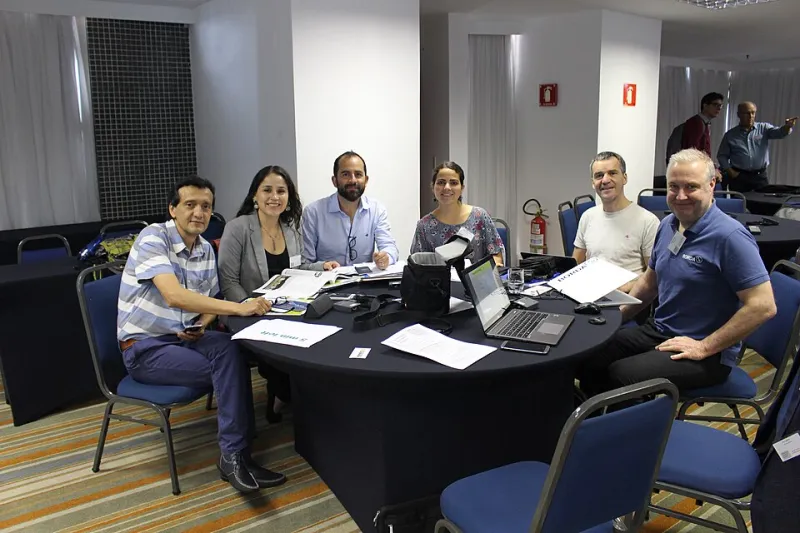
Photo: SuSanA Secretariat, CC BY-SA 2.0, via Wikimedia Commons
Every sustainability job advert is a small act of persuasion. The vocabulary barely changes — passionate, impact, net zero, drive change — and the differences only appear once you start asking where the money actually sits.
That's not cynicism. It's the same diligence you'd apply to any employer claiming values, applied to the fastest-growing corner of the UK job market.
The title inflation problem
'Head of Sustainability' at a sixty-person agency can mean one person, a spreadsheet and half a day a week. 'ESG Analyst' at a FTSE 250 can mean a team of nine and a hard reporting deadline in the spring. Both titles are honest in their own way. Only one of them is a lever.
Your task in the interview process is to work out which one you're being offered, and to do it before you've emotionally committed to the job.
Test one: where does the role sit?
Ask who the role reports to. Sustainability that reports into the finance director, the COO or a board committee tends to get decisions made, because it's close to where money and risk are discussed. A role parked under marketing or communications often exists to produce copy rather than to change operations.
Neither is a disgrace — a communications job in a company with genuine targets is a good job. But know which one you're taking, because the day-to-day is completely different.
Test two: the budget
Ask directly: what budget is attached to this role, and what did the function spend last year? A real function knows its number. A decorative one says 'we're building that out'.
Ask about headcount too: how many people, how many contractors, and has anyone done this job before you? If the answer is 'you'd be the first', that's not automatically bad — but it should change what you negotiate.
Test three: the mandate
Does the role have the authority to say no? Is sustainability consulted on procurement decisions, capital expenditure, supplier contracts, property and fleet? Can it stop a claim going into a tender document before it's published?
Ask for one specific example from the last twelve months where the sustainability function changed a business decision. Good interviewers will enjoy that question. Vague ones will answer it with adjectives.
Test four: the numbers
The UK's disclosure landscape has thickened considerably: streamlined energy and carbon reporting for larger companies, climate-related financial disclosure requirements, FCA rules for listed firms and asset managers, and a competition regulator that has taken a steadily closer interest in green claims. So ask:
- What's your baseline year?
- Have scope 1 and 2 emissions been externally assured, and by whom?
- Which scope 3 categories do you measure, and which do you estimate?
- What have you published, and where?
If the answer is a glossy PDF with no numbers in it, that is itself the answer.
Test five: targets with teeth
A target with no date, no interim milestones and no link to anyone's pay is a mood, not a plan. Ask about interim targets, capital allocation and whether sustainability metrics feature in executive remuneration.
Then ask what isn't going to plan. The candidate who asks that question learns more in ninety seconds than in three rounds of culture-fit conversation.
Test six: the culture of 'no'
Greenwashing rarely begins with a lie. It begins with a claim written by someone who didn't have the data, in a function too junior to stop it. So look for evidence that the organisation has ever reversed a decision on environmental grounds, or talks openly about a target it missed.
Six questions to send before the second interview
- Who does this role report to, and does that person sit on any board committee?
- What's the budget and headcount for the function this year?
- Which business decisions was the sustainability team consulted on in the last twelve months?
- What's the baseline year and verification standard for your emissions data?
- What happened to the previous holder of this role?
- What's a target you've missed, and what changed as a result?
Red flags worth taking seriously
- 'Wear many hats' and 'passion' where a salary band and a team should be
- The same role advertised twice in three years
- 'Build the reporting from scratch' with no software budget and no data access
- Sustainability language all over the website and nowhere in the annual report
- A sustainability lead who has never disagreed with the person who approves procurement
- Certification logos and award shortlists, but no published baseline
- A net-zero commitment dated 2050 and nothing dated 2027
If it turns out to be decorative
You can still take it. Some of the most useful sustainability work in the UK is being done by first hires building a function out of nothing, and there's real craft in that. But go in clear-eyed: negotiate a budget line into your objectives, get the reporting relationship discussed before you accept, and agree in writing what 'good' looks like at twelve months. Otherwise you'll spend eighteen months writing posts about a target you have no power to influence.
The green light test
A green title tells you what a company wants to be seen buying. The reporting line, the budget and the mandate tell you whether the job is connected to anything. Ask for those three things before you sign, and you'll know exactly which of the two you've been offered.