Signed, Sealed, Repayable: Reading the Training Bond Before It Reads You
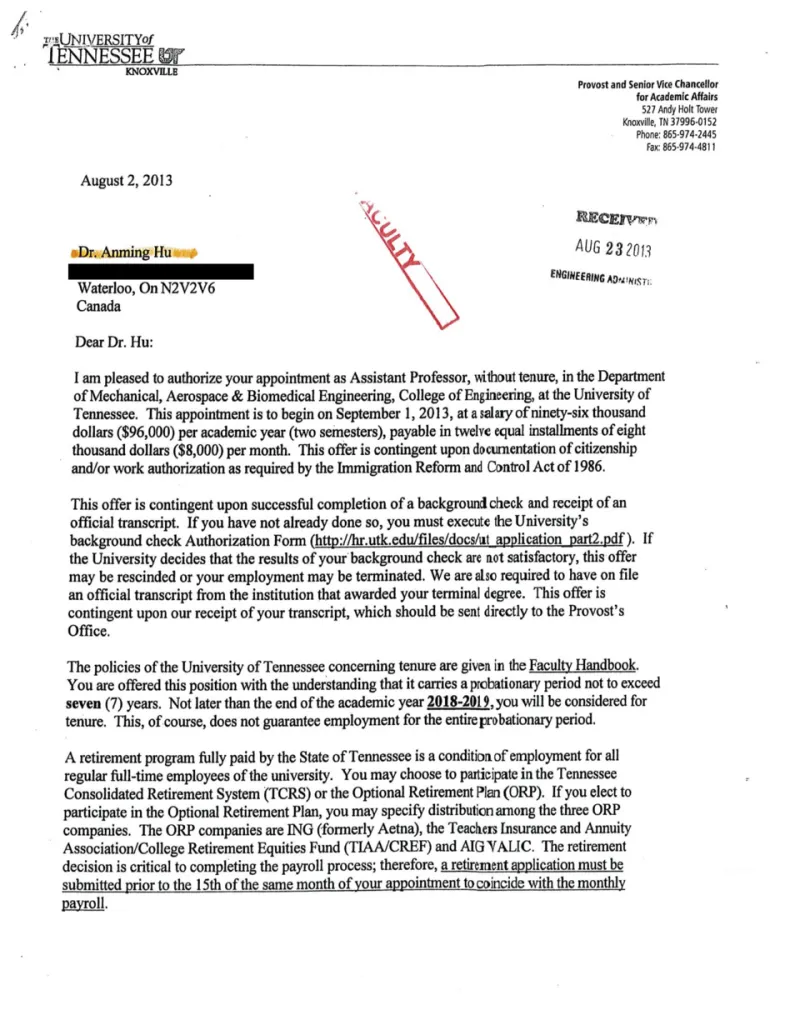
Photo: University of Tennessee, Public domain, via Wikimedia Commons
You've done the interview, charmed the panel, and the offer lands with a paragraph you weren't expecting: a £4,000 professional qualification, fully funded, because they 'invest in their people'. Then the contract arrives, and tucked behind the holiday entitlement is a schedule with your name on it and a sum you'll owe if you leave before a certain date.
That's a training bond. Sometimes called a repayment agreement, a clawback, or a training cost recovery clause. It is one of the few places in a job offer where an employer's real attitude to your development is written down in numbers.
First, call it what it is
A training bond is a contract term, not a favour with small print attached. In the UK these are generally enforceable, and the test tends to come down to two things: is the wording clear, and is the sum a genuine reflection of what the employer actually spent, rather than a punitive figure designed to make leaving expensive? Courts are unimpressed by clauses that look like penalties dressed up as costs.
One practical point: an employer usually can't simply help themselves to the money from your final payslip unless the contract authorises it or you agree in writing. Unauthorised deductions from wages are dealt with under the Employment Rights Act 1996, and that's a sentence worth remembering if a bond is ever invoked at speed.
None of this makes bonds inherently wrong. Plenty are fair. What matters is whether the document is honest about what it's for.
The three numbers that decide everything
The sum. Is it the course fee, or the course fee plus your salary for every day you were on study leave, plus travel, plus the conference in Lisbon, plus an admin charge? Ask for a written breakdown before you sign and again on the day you leave.
The period. A two-year bond on a qualification the market values at £3,000 is a different proposition from a one-year bond on an MBA. Length relative to cost is the tell.
The shape of the taper. This is the one people miss. A fair bond reduces month by month, so leaving at month eleven costs less than leaving at month two. A cliff-edge bond, where the whole sum is repayable until day 729 and then nothing, isn't really about recovering training costs at all. It's a stay-or-pay clause with a course stapled to it.
Read the schedule, not the brochure
Brochures describe development. Schedules describe what counts. Look for the definition of 'training': does it include mandatory compliance modules, internal onboarding, shadowing a colleague, or a subscription the business needed you to have anyway? If the definition is elastic, the bill can be too.
Also check whether the sum falls if you pay the course fee yourself part-way through, whether interest or administration fees apply, and what happens if you fail the exam through no fault of your own.
The redundancy question nobody asks
Ask what happens if they make you redundant. Ask what happens if you're off long-term sick. Ask what happens if your role is relocated to another site, or the team is transferred to a new provider under TUPE.
A bond that survives a redundancy you didn't choose isn't development funding. It's a transfer of business risk onto the individual, and it tells you a great deal about how the employer thinks about the people it hires.
Signals that 'investment' really means 'retention'
- The bond appears only for people the business is visibly worried about losing
- The repayment figure exceeds what the qualification costs to buy on the open market
- The clause is introduced part-way through employment, attached to training you were told was standard
- Senior staff are exempt, because the business assumes their loyalty differently
- Repayment is demanded in full the moment you hand in notice, rather than tapering
- The 'training' turns out to be induction you'd have done anyway
Questions to ask before you sign
- What is the total sum, itemised, and does it include salary, travel or expenses?
- Over what period does it reduce, and in what increments?
- Does the bond apply if the employer initiates the exit, including redundancy?
- What happens if the qualification is withdrawn, rescheduled or the provider goes under?
- Is there a spend cap, and who agrees it?
- Can I see the policy for everyone else on this scheme, not just my clause?
- What proportion of people who took this qualification are still here after two years?
- Can the term be negotiated?
That last one is worth asking out loud. Employers with a defensible bond will explain the reasoning. Employers using it as a handbrake tend to get prickly.
If you've already signed one
Don't panic, and don't rely on this article as legal advice. Get the exact wording, keep your own records of what the training actually cost and what you were actually paid, and ask in writing for an itemised statement if a sum is ever quoted at you. ACAS can talk you through your options, and if you're a union member, this is precisely the sort of Tuesday-afternoon casework a rep handles. Many exits settle at a lower figure than the number first quoted.
What the clause is really telling you
Development is one of the clearest windows into how an employer sees people: as assets to be grown, or as flight risks to be managed. A reasonable bond says something like we'll share the cost of an early exit. An unreasonable one says we'll make leaving hurt.
Both are values statements. Only one of them belongs in a job you actually want. Ask which one you're being offered, and let the answer inform more than just your signature.